


Beverage Processing for Consistent Product Quality

foodmachtech | 2026-09-08 | 1391
For beverage manufacturers, product consistency affects not only taste and appearance but also production quality and customer experience. Even with the same formula, different batches may vary in concentration, color, stability, or filling volume. These variations are often related to control over dosing, mixing, homogenization, heat treatment, and filling. Proper beverage processing equipment can reduce process fluctuations and help manufacturers maintain more consistent product quality.
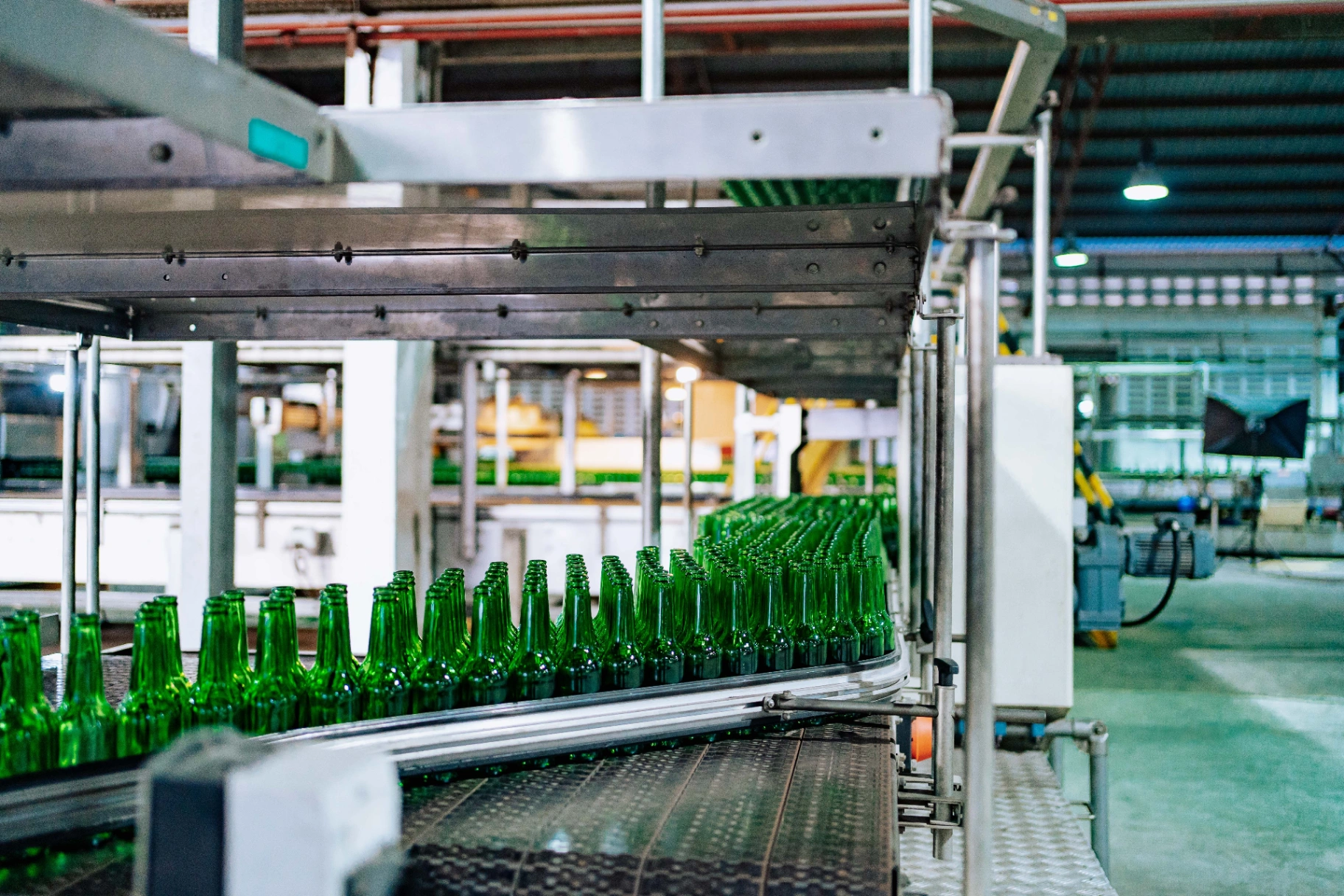
Dosing Control Reduces Batch Variation
Beverage production often involves multiple ingredients, including water, sugar, fruit juice, dairy ingredients, flavors, and acidity regulators. Their proportions directly affect the concentration, flavor, and physical properties of the final product, making accurate dosing a key part of consistent production.
Automated dosing and batching systems can control ingredient quantities according to preset parameters. Compared with fully manual operations, they help reduce weighing and ingredient-loading errors. For manufacturers that frequently change formulas or produce large volumes, automated batching also improves repeatability between production batches.
Uniform Mixing Improves Product Stability
After dosing, ingredients need to be thoroughly mixed so that sugars, juices, dairy components, and other additives are evenly distributed. Inconsistent mixing can lead to concentration differences, separation, or sedimentation.
Mixing tanks, agitators, and homogenizers can improve ingredient dispersion by controlling mixing speed, processing time, and pressure. For products such as dairy beverages and fruit drinks, homogenization can help create a more uniform particle or droplet distribution, improving texture and stability.
Stable Heat Treatment Supports Quality Control
Heat treatment is an important step in many beverage production processes. Variations in processing temperature or holding time can affect not only food safety but also flavor, color, and shelf stability.
Pasteurizers and ultra-high-temperature (UHT) processing systems can precisely control temperature and processing time according to the required process parameters. Combined with automated temperature monitoring, they help reduce variations caused by manual operation and improve consistency between production batches.
Accurate Filling Maintains Product Specifications
Filling is another process that can affect finished-product consistency. Inaccurate filling volumes can result in differences between packages, while inconsistent sealing may affect product storage.
Liquid filling machines can control filling volume and speed according to preset parameters and can be integrated with capping, labeling, and other packaging equipment. For high-volume beverage manufacturers, automated filling reduces manual errors while improving production efficiency and package consistency.
Process Control Improves Overall Production Stability
Product consistency does not depend on a single machine. It results from controlling the entire process, from dosing, mixing, and homogenization to heat treatment and filling.
When upgrading production equipment, beverage manufacturers should therefore consider not only individual machine performance but also process integration, parameter control, and automation. Accurate dosing, precise temperature and pressure control, and automated processing can reduce production fluctuations, improve batch-to-batch repeatability, and provide a foundation for future capacity expansion and digitalized beverage production.
Disclaimer: This article is compiled from public information and optimized with AI tools for industry information exchange and reference purposes only.