


Why Cooking Technology Matters in Meat Processing

foodmachtech | 2026-09-11 | 1331
In meat processing lines, the cooking stage is often treated as a "middle step" — it connects portioning and seasoning upstream with packaging and cooling downstream, yet rarely receives the attention it deserves. However, whether a production line can consistently deliver products that meet market standards often hinges on one of the most critical variables: the level of cooking technology.
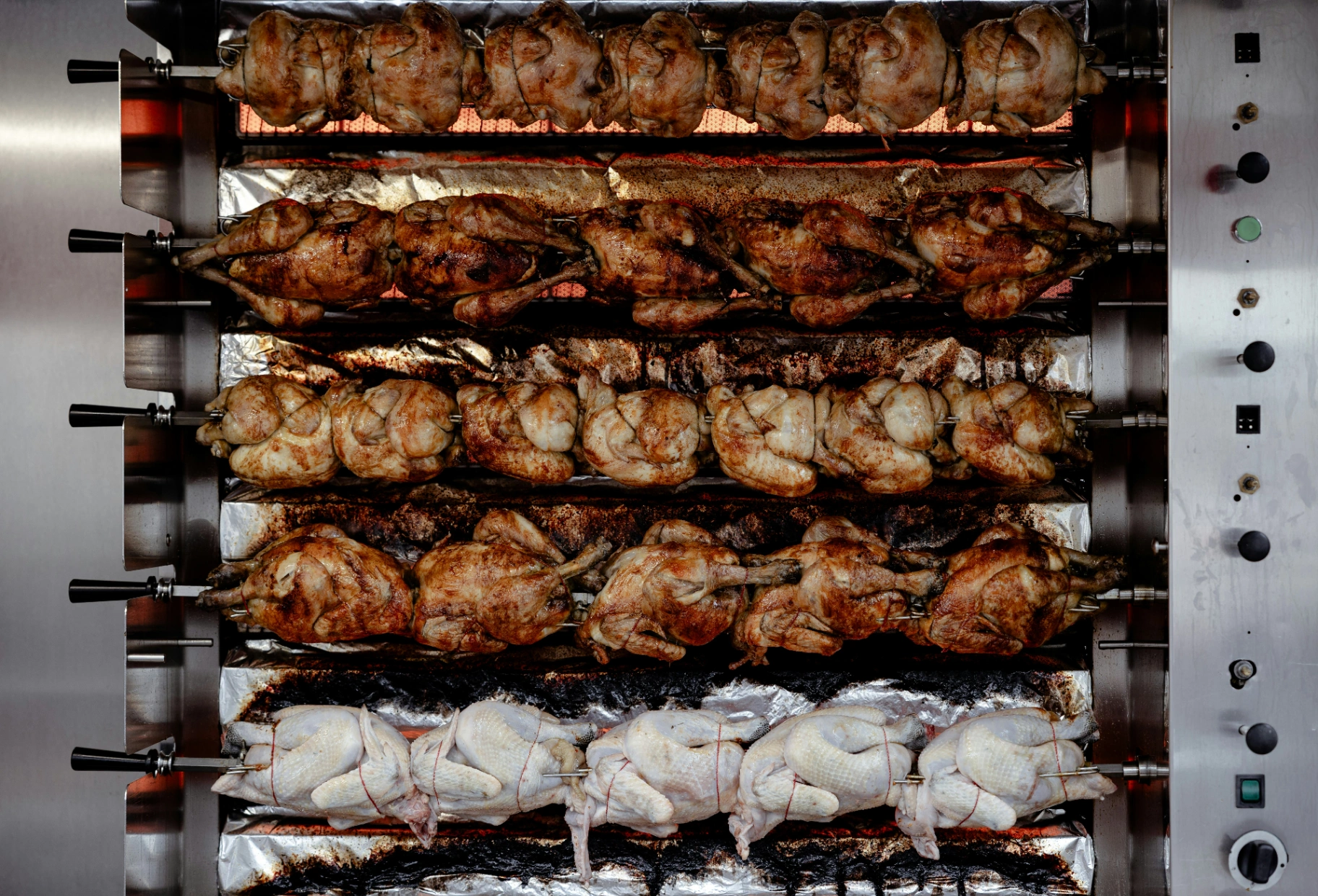
A rotating chicken in a roasting oven captures the most direct scene of thermal processing. But behind this equipment, a complete cooking technology system is undergoing a transformation from "experience-driven" to "data-driven."
The Cooking Stage Determines Core Product Quality Metrics
The color, tenderness, flavor, and yield that meat products develop after cooking directly determine their competitiveness in the end market. The formation of these quality metrics is closely tied to temperature control, time management, and environmental conditions during the cooking process.
Take sous-vide technology, which has rapidly gained traction in the meat industry in recent years. Research shows that this method — cooking vacuum-sealed ingredients at precisely controlled low temperatures for extended periods — can significantly improve meat texture and tenderness by promoting collagen gelation and precisely regulating myofibrillar protein denaturation and water migration. It also effectively reduces cooking loss and improves yield. The vacuum environment helps inhibit excessive fat oxidation and, through mild heating conditions, promotes Maillard reactions and the controlled degradation of flavor precursors, enriching the composition of volatile flavor compounds.
For meat processors, cooking technology directly affects raw material utilization, product consistency, and ultimately profit margins. In an industry where raw material costs account for a significant share, every percentage point of yield improvement can translate into meaningful cost optimization.
From Fixed Programs to Adaptive Control
The core logic of traditional cooking equipment is executing preset parameters — set temperature, set time, run the program. But meat raw materials have inherent variations: different batches differ in moisture content, thawing degree, and fat distribution. Fixed programs struggle to handle these variables.
The core direction of current industry technology upgrades is to give equipment the ability to sense and respond to raw material conditions. Cooking systems showcased at the 2026 World Robot Conference can already analyze ingredient states in real time through visual sensors and adjust heating parameters accordingly. This "observation-driven" rather than "time-driven" logic is extending from foodservice applications into industrial meat processing.
In meat processing equipment exhibition areas, machine vision-based meat quality inspection systems can now identify freshness and fat distribution with millisecond-level precision, pushing quality control from "experience-driven" to "data-driven." The combination of this technological path with the cooking stage means future thermal processing equipment will be able to automatically adjust process parameters based on the actual state of each batch of raw materials, achieving more consistent output quality in large-scale production.
The Dividing Line in Production Line Competitiveness
The technical level of the cooking stage is increasingly separating meat processors from one another.
On one hand, consumer expectations for meat product quality are becoming more specific — whether color is uniform, texture is consistent, and flavor is stable. These perception-level standards ultimately depend on precise control during the cooking stage. On the other hand, rising labor costs and shortages of skilled workers make traditional cooking methods that rely on manual experience increasingly difficult to sustain stable output.
This means cooking technology is no longer just an auxiliary step for "cooking meat through" — it is a fundamental capability that determines whether products can meet market standards and whether production lines can maintain stable operation.
For meat processors, the technical level of the cooking stage is becoming a key marker that distinguishes ordinary capacity from quality capacity. For purchasers,Understanding this shift helps more accurately assess the technical capabilities of meat processing equipment and find solutions that truly match production line needs.
Disclaimer: This article is compiled from public information and optimized with AI tools for industry information exchange and reference purposes only.