


What Are the Main Types of Vegetable Washers?

foodmachtech | 2026-09-04 | 1573
When vegetables enter the food processing phase, washing is necessary to remove soil, dust, and surface impurities. Due to differences in shape, surface texture, and friction tolerance among leafy greens, root vegetables, and other produce, a single washing method cannot meet all processing requirements.
Consequently, various types of vegetable washing equipment have emerged, including bubble, spray, rotary drum, and brush washers. Different machines utilize distinct cleaning principles to suit specific produce types and processing scenarios.
Why Are There Different Types of Vegetable Washers?
Based on mechanical force intensity and washing media, commercial vegetable washing equipment is categorized into the following types:
Bubble Washing Machines (Flexible Water Movement): High-pressure gas released from the bottom generates dense bubbles, creating turbulent water movement. Produce tumbles in the water, allowing gentle currents to strip away surface impurities without harsh mechanical friction.
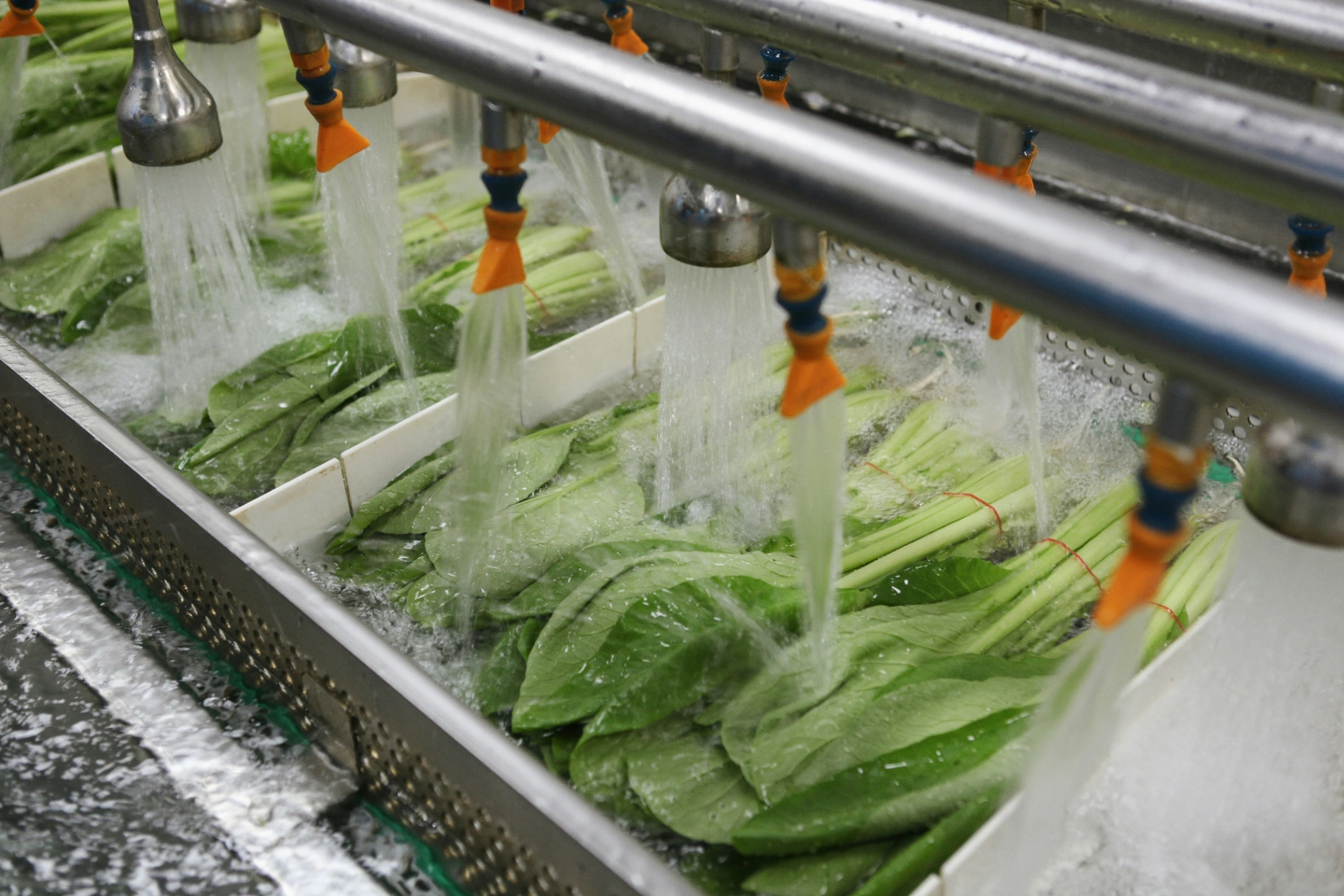
Spray Washing Machines (Directional Water Jets): High-pressure nozzles direct continuous water jets onto produce surfaces from multiple angles, using targeted water pressure to wash away dust and debris.
Rotary Drum Washing Machines (Tumbling and Impact): Produce enters an inclined rotating drum. As the drum turns, vegetables rub against each other and bump against the inner walls, working alongside internal water jets to remove caked-on soil.
Brush Washing Machines (Physical Contact Scrubbing): High-speed rotating brush rollers directly contact produce surfaces for physical scrubbing, combined with water spray to eliminate stubborn residues.
Comprehensive Comparison of Vegetable Washers
| Equipment Type | Primary Cleaning Force | Key Advantages | Key Limitations | Best Application Scenarios |
|---|---|---|---|---|
| Bubble Washer | Bubble bursting + turbulent water flow | Gentle, non-damaging, highly versatile | Limited effectiveness on sticky, stubborn mud | Leafy greens, pre-processing for fresh-cut produce |
| Spray Washer | High-pressure water impact | Fast processing, easily integrated into continuous lines | May leave blind spots on complex, uneven surfaces | Final stage of clean vegetable lines, surface dust removal |
| Rotary Drum | Mechanical tumbling + mutual friction | High throughput, powerful bulk soil removal | Can scratch delicate skin; unsuitable for leafy greens | Primary soil removal and rough washing of root crops |
| Brush Washer | Physical scrubbing + water spray | Superior removal of stubborn mud; supports peeling | Brushes wear out over time; improper use may mark skin | Deep cleaning of root crops, dirt removal in crevices |
Development Trends in Vegetable Washing Equipment
Shift from Standalone Units to Multi-Process Combinations
Food processing facilities rarely rely on a single machine. Multi-stage processing lines are configured based on raw material conditions:
- Root Vegetable Line: Rotary Drum Rough Wash ➔ Brush Deep Scrubbing ➔ High-Pressure Spray Rinse
- Leafy Green Line: Primary Bubble Wash & Soak ➔ Secondary Bubble Wash ➔ Spray Clean Water Rinse
Deep Integration into Continuous Automation
Washing units no longer operate in isolation. They connect seamlessly with upstream cutting/slicing machines and downstream dewatering, drying, and packaging units, reducing manual handling and secondary contamination.
Focus on Efficiency and Water Management
Modern equipment prioritizes resource efficiency alongside cleaning power. Recirculation, multi-tier filtration, and drainage controls help optimize water usage while maintaining strict hygiene standards.
Summary
The diversity of vegetable washing equipment stems from specialized industry requirements for different raw materials. Moving forward, washing technology will continue to evolve toward automated control, water recycling, and customized process combinations.
Disclaimer: This article is compiled from public information and optimized with AI tools for industry information exchange and reference purposes only.